2026-08-17 · Mike Kelly
How to Check for Roof Leaks During Spring Storms
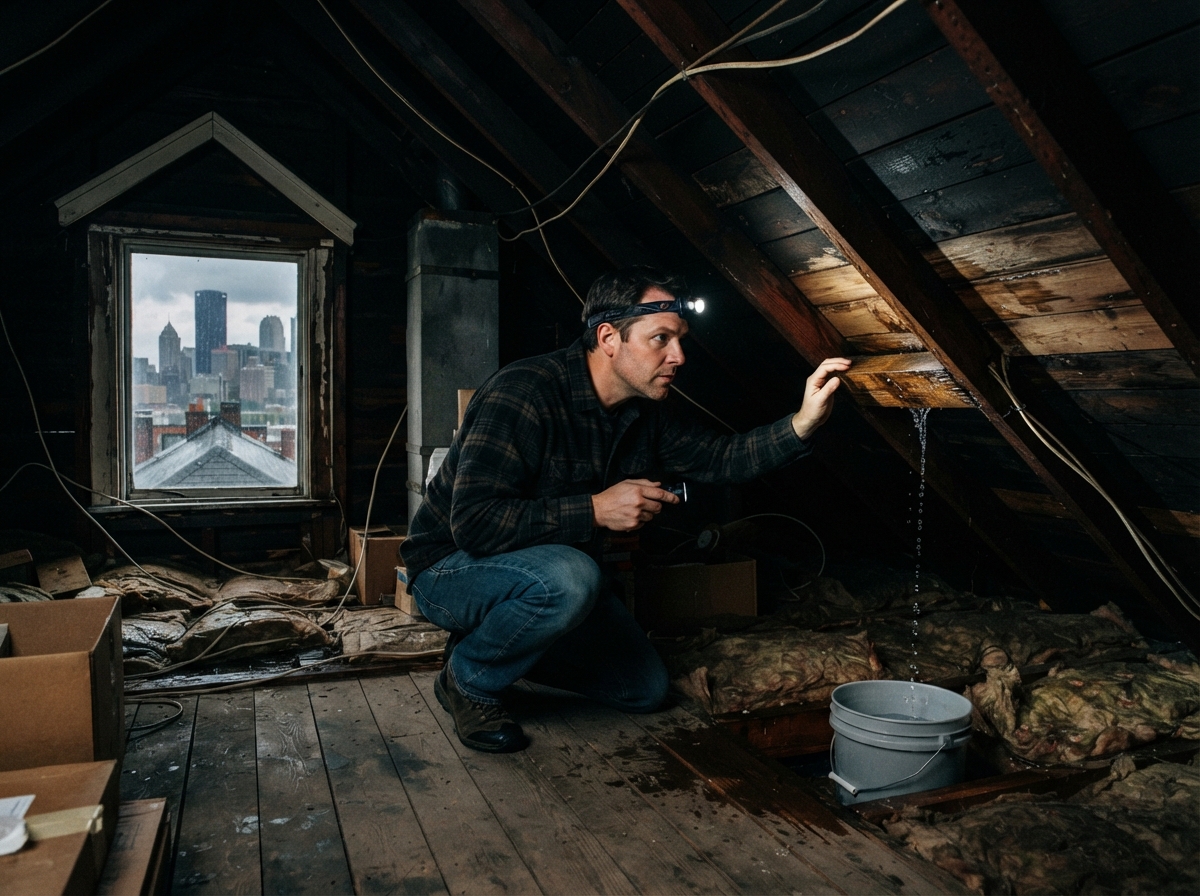
Look in the attic for new water stains or drips within hours of a spring storm, paying special attention to seams and flashing where most leaks begin in Allegheny County homes. Spring rains after cold winters often push water through small gaps that froze shut months earlier.
Where Do Leaks Show Up First After a Storm?
Check the attic right after rain stops because active drips tell you the exact entry point. In Pittsburgh's humid continental climate, warm spring air meets lingering winter moisture and forces water through nail holes or cracked flashing on older asphalt roofs common in neighborhoods like Squirrel Hill and Mount Washington. Walk the space with a flashlight and mark every stain with tape so you can match it to the roof above later. Gutters clogged with winter debris often back water up under shingles along the eaves, creating a wet line you can trace. Skip the big-box sealant on these spots because it traps moisture and speeds rot in the sheathing underneath.
How Do I Check the Roof from the Ground?
Scan the roofline from the yard or street with binoculars for missing shingles or lifted edges that let water in during heavy downpours. Count any damaged sections because three or more missing shingles in one area usually means the underlayment is exposed and needs attention within days. Look at the flashing around chimneys and skylights where expansion from temperature swings in our climate loosens the seal over 8–12 years. On homes in Oakland or Shadyside the steep pitches make ground checks safer than climbing, but still avoid ladders if the ground is soft from recent rain. Note any sagging sections because they point to water that has already reached the decking.
What Should I Look for in the Attic?
Shine a light along rafters and look for dark streaks or soft insulation that shows water has traveled from the roof deck. Measure the wet area because anything larger than a dinner plate means the leak has been running for multiple storms and the insulation needs replacement soon. Check around plumbing vents and ridge vents where warm moist air from inside meets cold roof sheathing and condenses during spring temperature swings. Pull back a small section of insulation only if you can reach it safely without stepping on wires or ducts. If you find mold starting on the wood, stop and call for help because that crosses into health and structural territory.
What Do Repairs Typically Cost?
Minor flashing fixes usually run $400–$800 while full section replacement after storm damage lands between $1,200–$2,500 depending on pitch and access. These ranges cover labor and basic materials on a standard Pittsburgh two-story home without adding insurance claims. Larger leaks that reach the decking push costs to $3,000–$5,000 because the roofer must replace plywood and insulation too. Get the quote in writing before work starts so you know the price covers cleanup and disposal.
When Should I Handle It Myself Versus Calling?
You can safely clear gutters and note visible damage from the ground without special tools or training. Anything that requires walking the roof, cutting flashing, or working near power lines crosses the safety line and needs a pro. If the leak sits over living space or you see daylight through the decking, stop and schedule service because code rules on ventilation and underlayment apply. We offer roof leak repair and storm damage roof repair when the job moves past simple inspection.
If you find active leaks this spring, reach us at 2270 Roswell Dr for a same-day look during our Mon-Sat 7am-7pm hours or 24/7 emergency service.