2026-08-17 · Mike Kelly
Addressing Moss Growth on North-Facing Pittsburgh Roofs
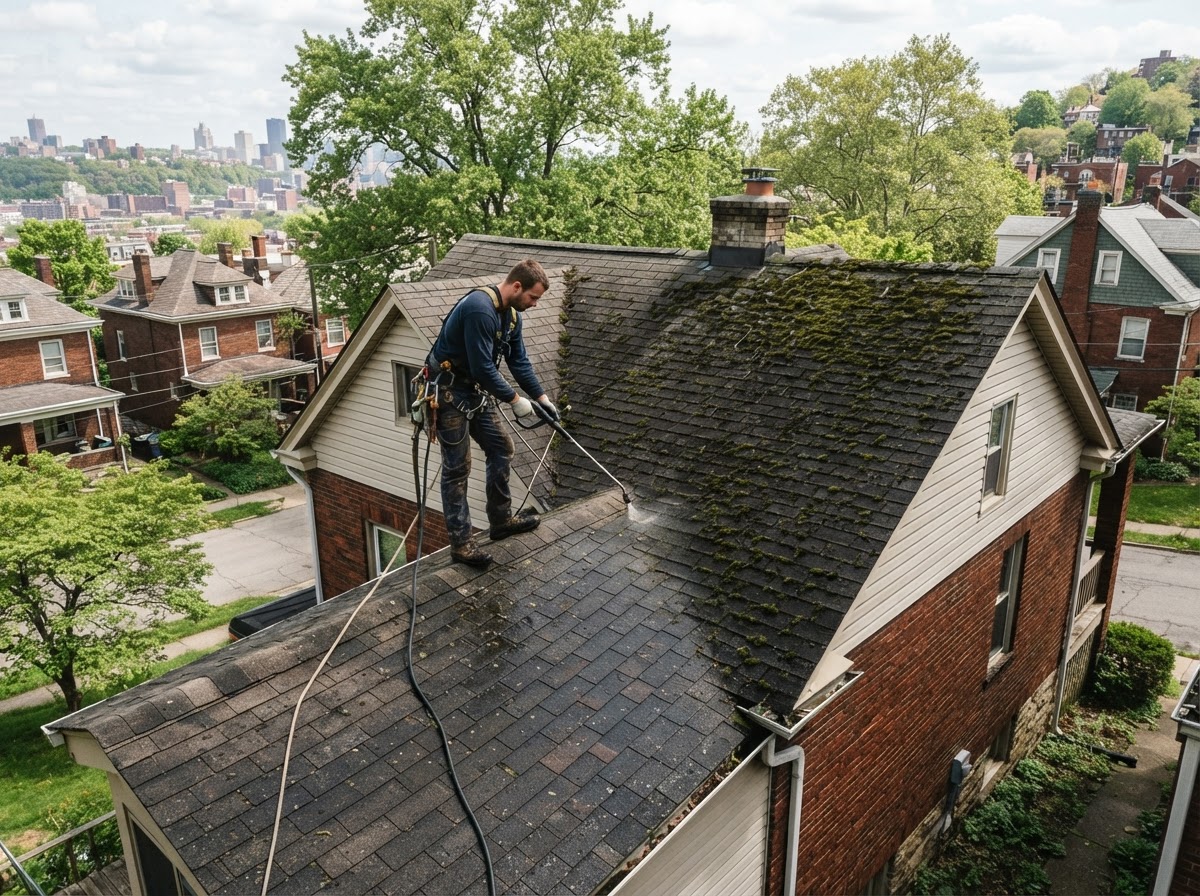
Moss on north-facing Pittsburgh roofs needs zinc or copper strips plus better airflow, not just a quick bleach spray. The shade from our humid continental climate with cold winters and warm summers keeps those slopes wet long after south sides dry out, so the growth returns in 2-3 years unless you fix the moisture source.
Why Does Moss Prefer North-Facing Roofs in Allegheny County?
North slopes get almost no direct sun from October through March. That long stretch of shade plus our cold winters and warm summers creates the perfect damp cycle for spores to take hold. Older homes in neighborhoods like Squirrel Hill and Oakland often have shallower roof pitches that hold debris, giving moss extra footing. Once it mats down, it holds even more water against the shingles and speeds granule loss.
How Do You Spot Moss Before It Spreads?
Walk the yard in early spring and look for dark green or black patches along the north eaves and valleys. Check near chimneys and skylights where shade is deepest. If you see it on one house in a block of row homes, the same conditions probably exist on yours. Early signs include small velvet-like tufts that turn slippery when wet.
What Does Moss Removal Cost Around Pittsburgh?
A basic treatment on a typical 1,200-square-foot roof runs $300–$600 using zinc strips and a low-pressure wash. Full removal plus deck inspection climbs to $800–$1,200 when growth has reached the ridge. These prices cover labor and materials for homes in areas like Shadyside or Bloomfield. Add $150–$300 if gutters need clearing first so water stops pooling at the eaves.
When Should You DIY and When Should You Call?
You can handle light surface growth yourself with a pump sprayer and zinc sulfate solution on a dry day above 50 degrees. Wear eye protection and keep the mix off plants. Stop at the safety line though: if you need a ladder over two stories, the slope is steep, or you see missing shingles, call a pro. Same rule applies if the moss sits near a skylight or chimney where flashing might get damaged.
Heavy buildup usually means the underlayment is staying wet, so pair removal with a roof inspection to check for rot. In row-house blocks common around East Liberty, poor attic ventilation often feeds the problem from below.
How Do You Keep Moss From Coming Back?
Install zinc or copper strips 6–8 inches below the ridge so rain washes the metal ions down the slope. Trim any overhanging trees that block sun. Make sure gutters drain fully—standing water at the eaves is an open invitation. Homes near Point Breeze that added ridge vents after moss treatment saw regrowth drop by half within two seasons.