2026-08-17 · Mike Kelly
Ventilation Improvements to Reduce Ice Dams in Pittsburgh
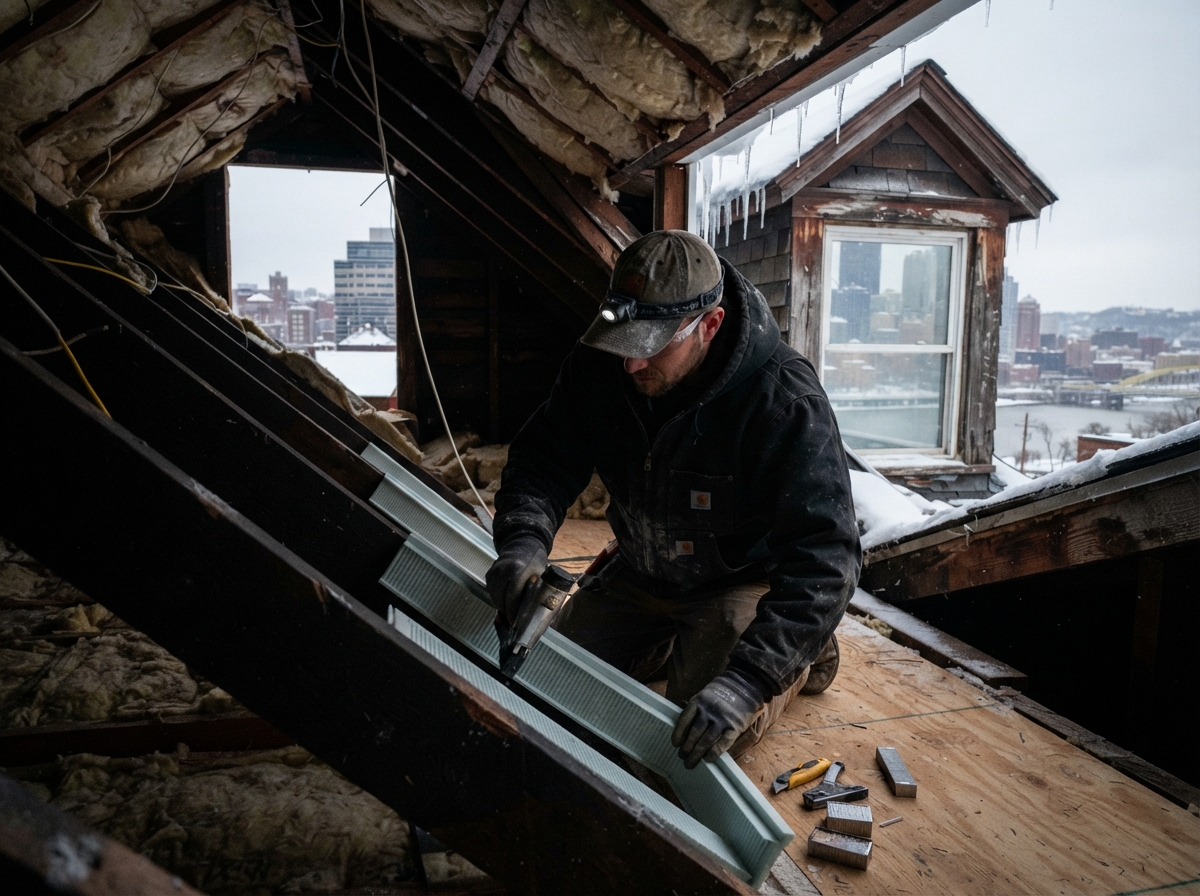
Adding ridge vents plus soffit intake cuts ice dam formation by 60-80 percent on most Pittsburgh homes that see humid continental winters with cold snaps. The fix works because it keeps the roof deck cold so snow stays frozen instead of melting and refreezing at the eaves. Local houses in Squirrel Hill and Oakland often need this upgrade after 15 years because original vents get blocked or were never sized right for the attic volume.
Why Do Ice Dams Form on Pittsburgh Roofs?
Pittsburgh winters drop below freezing for weeks while attics stay warm from indoor heat leaking upward. That warmth melts the snow layer right above the sheathing, and water runs down until it hits the cold overhang and freezes solid. Homes built before 1980 in Allegheny County usually have small or missing soffit vents, so the only air path is a ridge vent that never pulls enough volume. Once the dam grows past 4 inches it backs water under shingles and into ceilings. We see this pattern every January on streets in Shadyside and Bloomfield where trees block wind and reduce natural drying.
Which Ventilation Changes Stop Ice Dams?
Start with continuous ridge vent cut 1 inch wide along the full peak and pair it with 1 square foot of soffit intake for every 150 square feet of attic floor. That ratio keeps air moving even when temperatures swing from 10 degrees at night to 35 in the afternoon. Skip the big-box sealant tubes on existing leaks; they trap moisture and make the next freeze-thaw cycle worse. Instead, add baffles between rafters so insulation does not block the intake path. If the roof already has storm damage, pair the vent work with a full inspection to catch flashing gaps at the same time.
What Does Ventilation Work Cost in Allegheny County?
Expect $800–$1,500 for a basic ridge and soffit upgrade on a 1,200 square foot ranch, or $1,800–$2,800 on a two-story with multiple hips in Regent Square. Prices rise $400–$700 if old insulation must be pulled and reset to create clear air channels. Labor runs 6–10 hours for two roofers once the shingles are lifted. These numbers cover permits when required by the city and basic disposal of cut material. Homeowners who wait until March often pay 20 percent more because crews book out fast after the first thaw.
When Should You DIY and When Call a Roofer?
Cleaning existing soffit screens and removing attic debris stays safe for most homeowners with a ladder and leaf blower. Measuring the current vent area and ordering the right ridge vent length also works if you stay off the peak. Anything that requires cutting the roof deck, moving insulation around electrical boxes, or working above 12 feet should go to a crew that carries the proper fall protection. We draw the line at code items like nailing ridge vent to rafters or sealing penetrations that touch wiring. If the house sits in a historic district or needs an insurance claim documented, skip the DIY route entirely.
Homes in Lawrenceville and East Liberty with slate or metal roofs gain the same 15–20 year extension on shingle life once the ventilation balances out. If the ice dams have already caused leaks, start with a targeted removal before the vent work. Ice Dam Removal crews handle the immediate water threat while the ventilation team plans the long-term fix. Older stock in these neighborhoods often needs the paired approach because original construction left little room for modern airflow.
See how similar homes handled the same problem in our guide on Dealing With Ice Dams on Older Pittsburgh Homes. For the actual install, we route customers to Roof Ventilation Installation so the job matches the existing roof slope and material.
Stop by 2270 Roswell Dr or call during Mon-Sat 7am-7pm if your attic needs a ventilation check before the next freeze.